When you need a nearby bakery, who do you ask? Or when you are planning a trip to another state, how do you get your hotel recommendations? Most of us right now are not Googling all these questions. We are either asking ChatGPT, planning through Claude, or telling a voice assistant to shortlist the best options for us. So, SEO has changed. Yes. However, the core of intent remains the same.
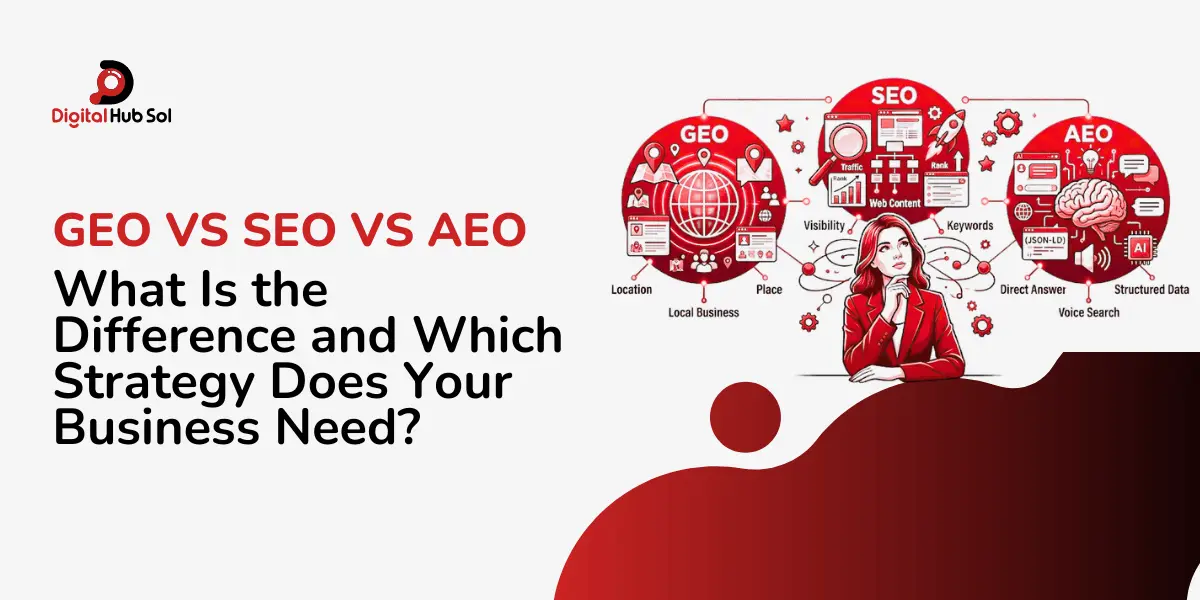
The change is that now SEO, GEO, and AEO work together. What are these, and what is the difference between GEO vs SEO vs AEO? Let us help you answer them all in this article.
What Is SEO?
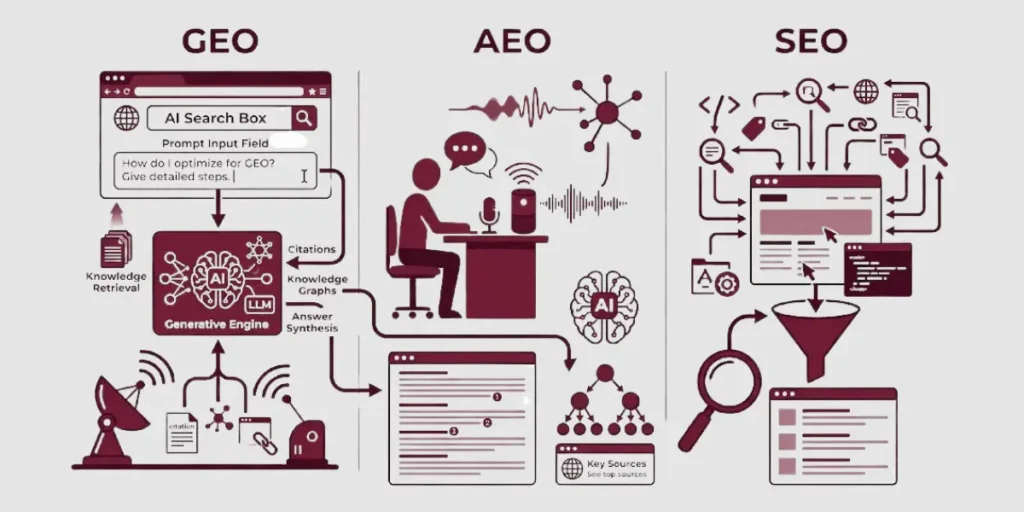
Search engine optimization helps people find your website via organic search. SEO is about ranking, traffic, technical performance, content relevance, authority, and conversion.
A good SEO foundation includes:
- Buyer-intent and Keyword Research
- Fast, mobile-friendly, technically sound pages
- Well-optimized service, product, and location pages
- Internal Linking & Quality Backlinks
- Content that is useful and answers real questions from customers
- Simple calls to action that convert traffic into leads or sales
SEO is still the bedrock because AI-powered search is built on the same underlying ranking and quality systems as traditional Google Search. Google’s own guidance states that, fundamentally, AI SEO in 2026 is still optimizing for the search experience.
What Is AEO?
Answer Engine Optimization (AEO) is the structuring of content so that it can be pulled out by search engines as a direct answer. AEO helps your content get into featured snippets, People Also Ask boxes, AI Overviews, and voice search results.
For example, if a user types, “How much does SEO cost in the UAE?” an AEO-optimized page should offer a simple answer, plus the variables that affect cost, right away.
Effective AEO tactics include:
- Putting a direct answer at the top of the page
- Headings based on questions
- Adding FAQs from real customer questions
- Using comparison tables, numbered steps, and brief definitions
- Using relevant structured data when appropriate
- Updating facts, prices, and service details
AEO is particularly helpful when buyers have specific questions before they are ready to contact a company.
What Is GEO?
Generative Engine Optimization – GEO focuses on whether AI systems trust and understand your business, and whether they cite and mention you when generating an answer. Where AEO is more likely to pull an answer from one page, GEO is trying to be a trusted source within a synthesized answer from multiple sources.
GEO is not about fooling the AI tools with keywords. It is about becoming really citable.
Strong signals from GEO are:
- Research articles, surveys, industry data, and case studies
- Expert insights and first-hand experience
- Consistent brand, author, and business information across the web
- Digital PR, mentions and reviews from third parties
- Clear evidence sources and up-to-date information
- Content that offers a fresh perspective instead of just rehashing the usual advice
AI engines typically refer to specific, verifiable, authoritative information that is hard to find elsewhere.
GEO vs SEO vs AEO: The Clear Difference
The best way to understand GEO vs SEO vs AEO for businesses is like this:
- SEO earns discovery.
- AEO earns extractions.
- GEO gets citations.
Factor | SEO | AEO | GEO |
Main goal | Rank in organic search results | Become the direct answer | Get cited or recommended by AI |
Main platforms | Google and Bing | Featured snippets, AI Overviews, voice search | ChatGPT, Perplexity, Gemini, Copilot |
Content style | Comprehensive, relevant, well-optimized pages | Clear, concise, answer-first sections | Original, evidence-led, authoritative content |
Success metric | Rankings, traffic, leads, sales | Snippet visibility and answer presence | AI mentions, citations, and brand visibility |
Best for | Every business with a website | Question-heavy industries and services | B2B, SaaS, professional services, and specialist brands |
GEO, SEO, and AEO aren’t interchangeable. They address different visibility challenges throughout the customer journey.
This approach not only guides users through their research journey but also helps search engines recognize your expertise on the subject.
Which Is Better for Business: GEO, SEO, or AEO?
The answer to which is better for business- GEO, SEO, or AEO depends on where your visibility is lacking:
If your business… | Prioritize… | Why |
Has low ranks, sluggish pages, or thin content. | SEO | AI systems cannot cite a site that they can’t find and trust. |
Ranks well but is rarely seen in snippets or AI overviews. | AEO | Your content requires clearer answer formatting. |
Has decent content but is lacking in AI-generated solutions. | GEO | Your brand needs better authority and citability. |
Serves local clients. | SEO plus local AEO | Local intent, reviews, and service pages attract queries. |
Offers complicated B2B, SaaS, or professional services. | GEO-led strategy | Buyers need research, proof, and expert help. |
For most businesses, it’s not about choosing between GEO vs SEO vs AEO. The ideal strategy is to begin with SEO, bolster your AEO efforts, and then turn your attention to GEO after you’ve nailed the essentials.
How to Choose Between GEO, SEO, and AEO Strategies?
So, where should you focus as SEO experts or business owners? Here is how to do it:
1. Audit Your Current Visibility
Take a close look at your rankings, organic traffic, conversions, indexed pages, site speed, backlinks, and how often your brand is searched. Figure out if your main issue lies in being discovered, how visible your answers are, or if it’s about AI citations.
2. Map Your Customer Questions
What are the questions customers ask before buying? Include awareness questions, comparison questions, pricing questions, and decision-stage questions.
3. Fix SEO Fundamentals First
To enhance technical performance, focus on improving service pages, location pages, metadata, internal links, and the depth of your content. This solid groundwork is essential for AI search algorithms to function effectively.
4. Add AEO Structures
Transform your current pages into valuable resources that are ready to provide answers. Incorporate straightforward answers, frequently asked questions, comparison tables, step-by-step guides, and well-defined headings.
5. Build GEO Assets
To create content that truly warrants citation, focus on industry research, original data, expert guides, case studies, and practical frameworks. This approach turns the discussion of choosing between GEO SEO and AEO strategies from a theoretical exercise into something actionable and relevant.
What UAE Businesses Should Prioritize
SEO services in the UAE are facing stiff competition, particularly in industries such as real estate, healthcare, e-commerce, logistics, hospitality, and professional services. Relying on generic blogs is no longer sufficient.
A proficient SEO company in the UAE ought to provide:
- Technical SEO, content SEO, and local SEO.
- AEO-ready page structure
- Google Business Profile and review optimization
- AI visibility monitor
- Original Content & Digital PR
- Reporting associated with leads and revenue
The best SEO company in the UAE will never use GEO as a replacement for SEO. It will create a unified strategy to improve rankings, answer visibility, and AI citations at the same time.
Businesses ought to team up with SEO specialists who truly understand buyer intent, regional search patterns, and content that converts. The best SEO agency will take the time to learn about your sales process, the questions your customers are asking, and your revenue targets, not just the keywords you want to rank for.
Conclusion
The way people search for information is changing, and businesses need to adapt to stay visible. Understanding GEO vs. traditional SEO and the relationship between GEO vs SEO vs AEO is essential for building a strong online presence.
Rather than choosing one strategy, businesses should combine all three to improve rankings, provide helpful answers, and build brand authority across AI platforms.
Digital Hub Sol helps businesses navigate these changes with effective SEO strategies, quality content, and a focus on long-term growth. The goal is simple: make your business easier to find, trust, and choose.
Frequently Asked Questions
Yes, small businesses can improve visibility by publishing useful content and keeping business information accurate. Customer reviews and local relevance also help.
Review important website pages regularly to keep information accurate and relevant. Update content whenever services, pricing, industry trends, or customer needs change.
Social media can increase brand awareness and bring visitors to your website. However, social engagement is not a direct Google ranking factor.
Businesses can monitor website traffic, leads, conversions, and brand visibility. Regular performance reviews help identify opportunities and improve marketing results.